Transitioning to Grey Without the Awkward Two-Tone Phase
You've made the decision or you're circling it. No more colour appointments every four weeks, no more watching the roots come in like a countdown timer. You're going grey, on purpose. And then the fear kicks in: those months where your hair is half silver, half faded colour, with a hard line across your head announcing exactly how long it's been since your last dye job.
Let's say the honest thing first: there is no way to grow out coloured hair with zero visible transition. Anyone promising that is selling you something. But there is a very big difference between an unmanaged grow-out and a planned one. The awkward two-tone phase isn't a fact of nature — it's what happens when you stop colouring and do nothing else. With a plan, the transition can look intentional the entire way through. Here's how.
Why the Two-Tone Line Happens in the First Place
The line exists because of contrast. Your natural grey grows in at the root while the coloured lengths hold on to pigment, usually a warm, faded version of whatever was originally applied, because dye oxidises and shifts over time. The darker and warmer your old colour, and the more silver your natural grey, the harder that line reads. So every real transition strategy does one of two things: it softens the contrast, or it shortens the distance the grey has to travel.
Strategy One: Blend the Line Instead of Waiting It Out
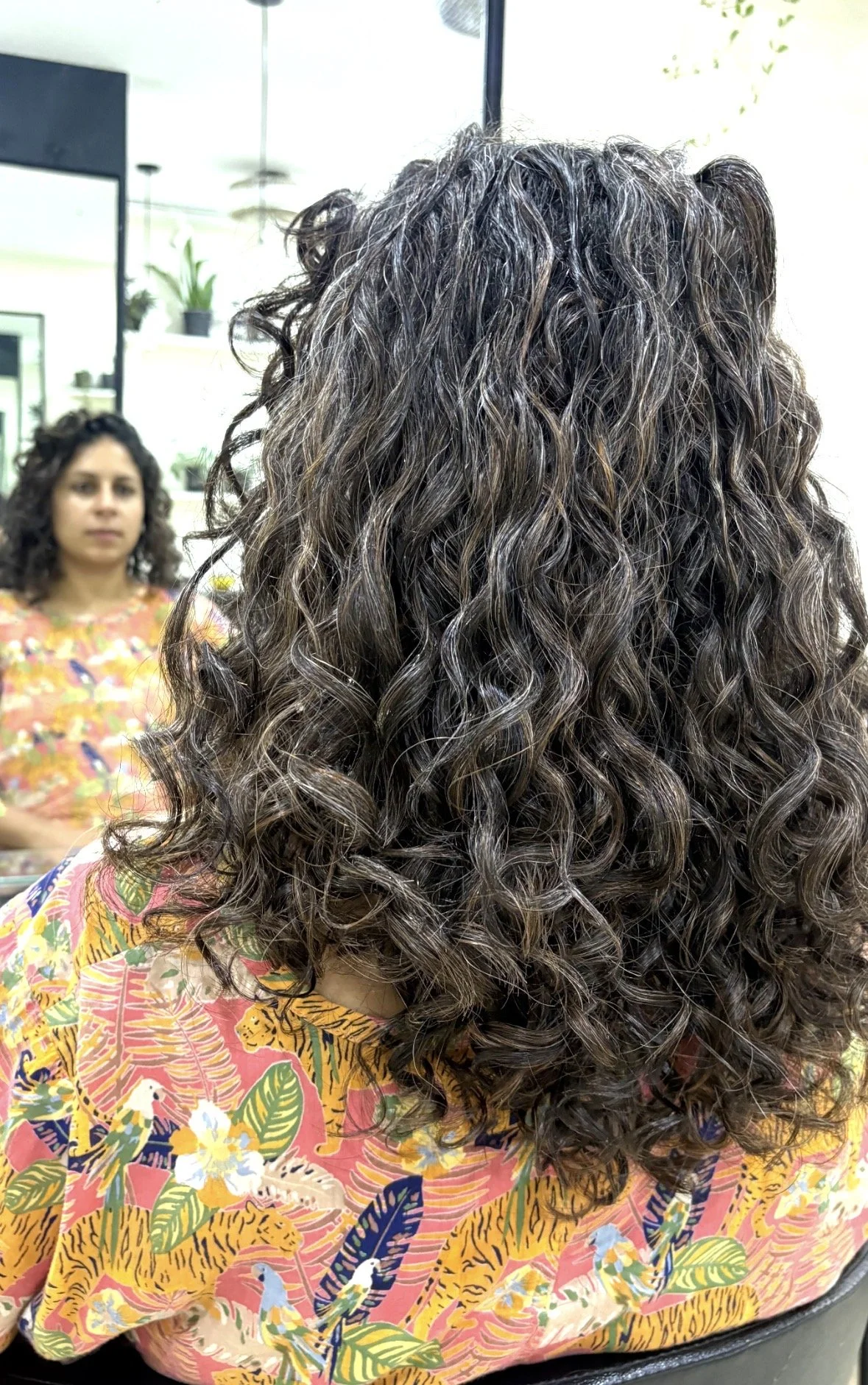
This is where a salon truly earns its keep. Instead of letting a solid block of old colour grow down your head, a colourist can break that line up so the eye never finds it. Highlights and lowlights woven through the lengths scatter lighter and darker pieces around the incoming grey, so silver roots read as part of a deliberate, multi-tonal look rather than a regrowth line.
One important caution for our curly clients: these are still chemical services on hair that has likely been coloured for years. Space them out, and pair every one of them with serious moisture work, deep conditioning before and after because a transition that trades a colour line for dry, brittle lengths is not a win.
Strategy Two: Shorten the Distance
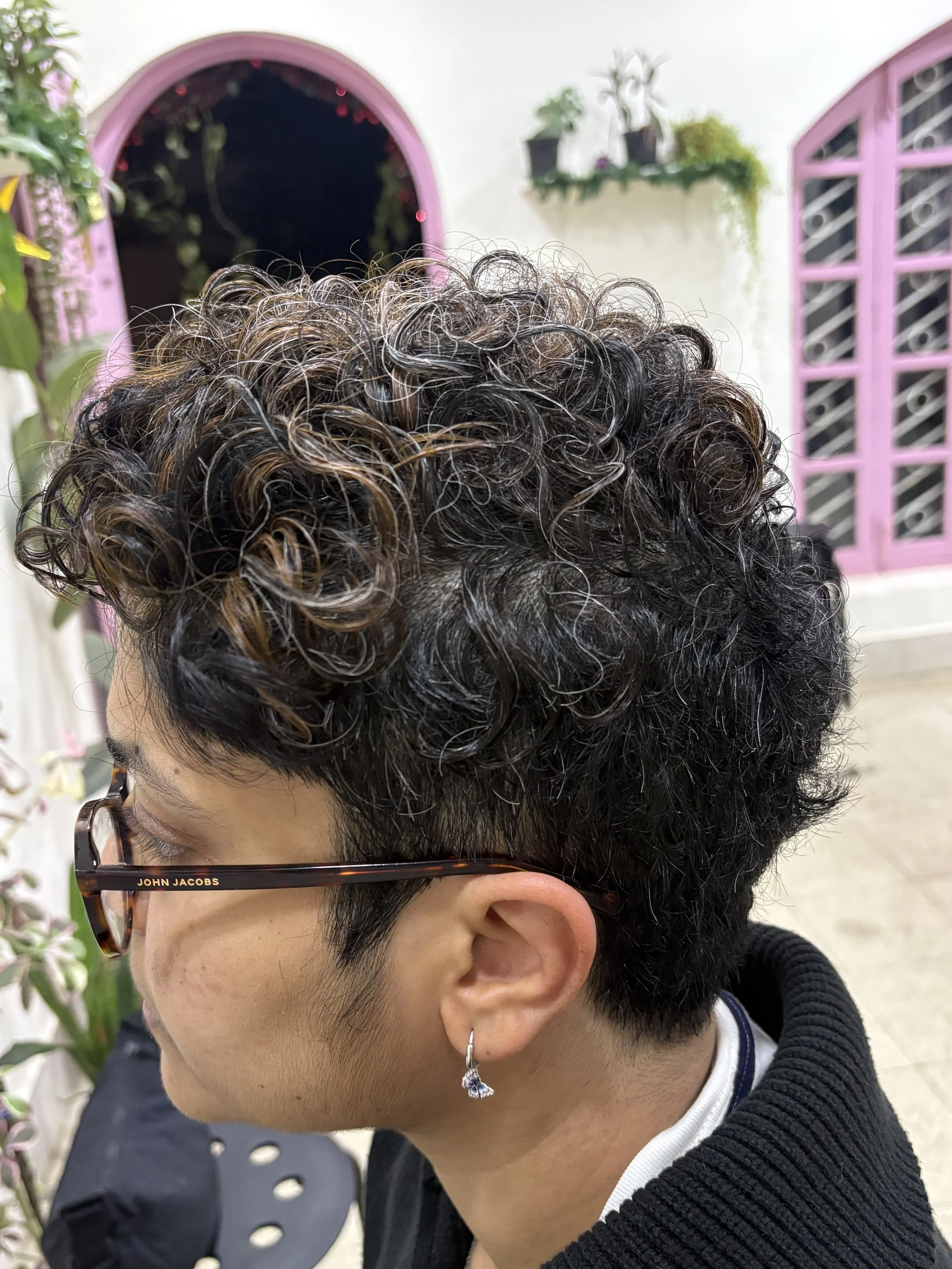
The simple maths of a grow-out: grey has to travel from your root to your ends, and hair grows roughly a centimetre a month. The shorter your hair, the shorter that journey. This is why so many people pair the grey transition with a shorter cut like a bob, a shaped crop, a shoulder-length shape and why it works so well. You're not "giving up length," you're cutting away the oldest, most-processed, most faded hair on your head and letting the healthiest version of your hair take over sooner.
You don't have to do anything dramatic. Even committing to slightly more frequent trims during the transition, taking off a little more than usual each time quietly removes months from the process.
The Part Nobody Talks About: Texture and Moisture
Grey hair is not just a colour change. The strands that grow in often behave differently, coarser to the touch, drier, sometimes with a slightly different curl pattern than the pigmented hair around them. On curly texture this is even more noticeable, because dryness is already the default battle.
So during a transition you're managing two different kinds of hair on one head: older coloured lengths that are chemically processed and porous, and new grey growth that runs dry on its own. Both are thirsty for different reasons, and the answer for both is the same foundation we always come back to. Regular deep conditioning, consistent leave-in application, and refreshes between washes will do more for how your transition looks than any toner. Well-moisturised silver curls look striking. Dry ones look like the "before" picture. The difference is hydration, not the grey.
In the Chair: How We'd Plan Your Transition
If you came to us wanting to go grey, here's what the consult would actually cover: how much grey you have and where it's concentrated, what colour history is sitting on your lengths, your curl pattern and how much moisture your hair is currently holding, and importantly, how you want to feel during the in-between months. From there we'd map a route: blending sessions if you want the line invisible, a cut strategy if you want it over faster, or a combination of both. No pressure toward either. Going grey is your call; our job is just to make the road there look good.
The Takeaway
The awkward two-tone phase is optional. Grey transitions go wrong when they're unplanned, when the only strategy is "stop colouring and endure it." Soften the contrast, shorten the journey, and keep your hair deeply moisturised throughout, and the in-between months stop being something to hide. Silver curls are beautiful. Get them there in a way that lets you enjoy every stage, not just the finish line.