You wash your hair, look down, and there it is — a small animal's worth of hair around the drain. Or you catch your reflection in harsh light and swear you can see more scalp than you used to. Cue the 11pm Google spiral, the panic-buying of oils and serums, and the quiet dread that your hair is "going."
Here's the thing: hair in your hand and hair getting thinner are two different events, with different causes and different fixes. Most people use "hair fall" for both, treat both the same way, and end up solving neither. So before you spend another rupee on a miracle product, let's get the diagnosis right — because after 35, knowing the difference between shedding and thinning is the single most useful piece of hair knowledge you can have.
Shedding: Hair Leaving From the Root
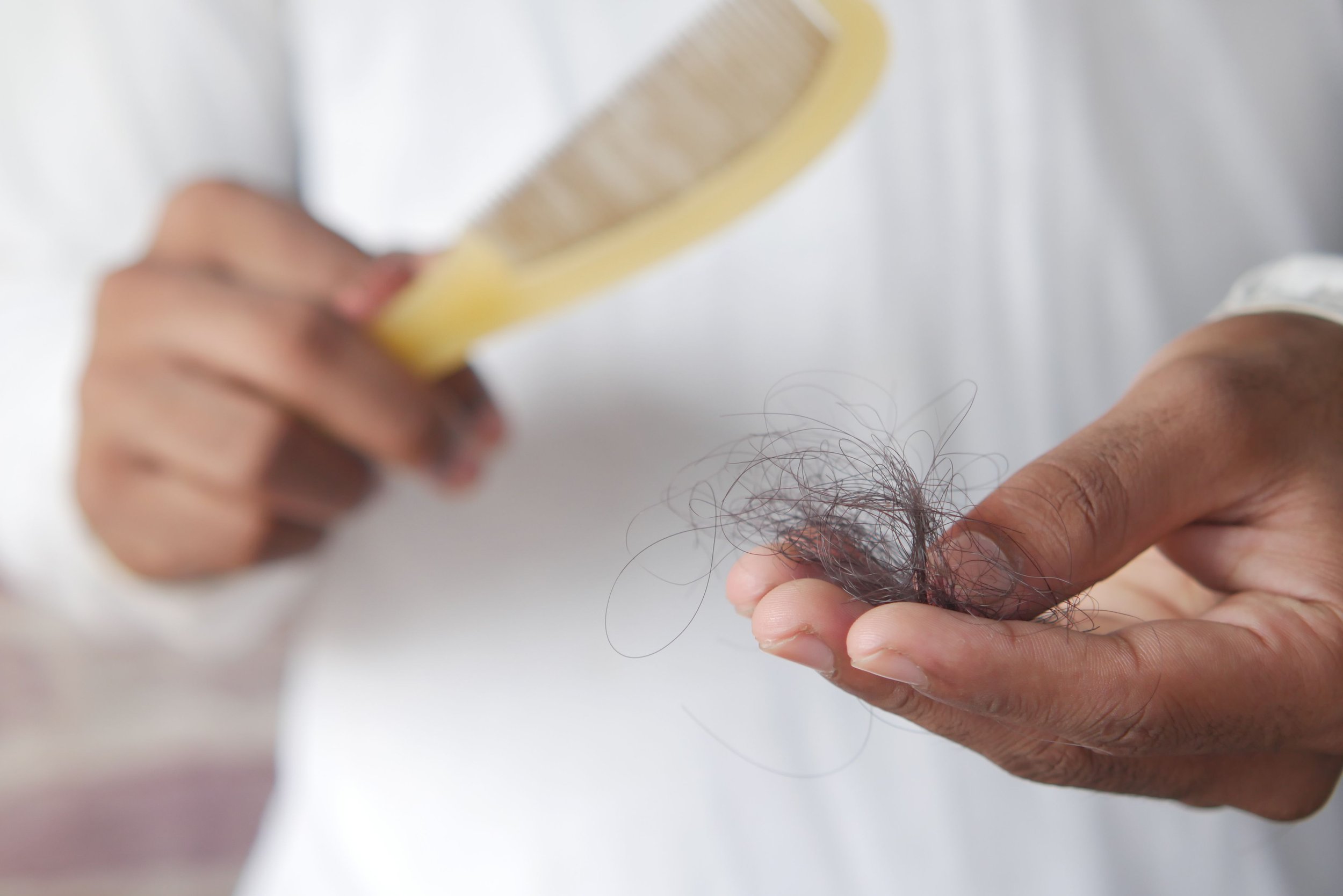
Shedding is hair completing its natural life cycle and falling out from the root — full strands, usually with a tiny white bulb at one end. Everyone sheds daily; it is the scalp's normal turnover, and losing strands every day is not a malfunction, it's maintenance.
Two things make shedding look scarier than it is, especially on curly and wavy texture:
Curly hair sheds on a delay
Strands that detach from the scalp don't fall to the floor the way straight hair does — they stay tangled in the curls around them until wash day. So if you wash and detangle twice a week, you're seeing three or four days of completely normal shedding all at once, in one dramatic clump. This is the same thing we tell clients after taking out braids: weeks of held-in shed hair showing up in a single session is not sudden hair loss, it's a backlog.
Shedding comes in waves
Stress, illness, fever, crash dieting, surgery, postpartum recovery — all of these can push a larger-than-usual batch of hair into the "fall" phase at once, typically showing up two to three months after the trigger. This kind of shedding is alarming to watch and, in most cases, temporary. The hair that shed from a healthy follicle grows back.
The key feature of shedding: the follicle is fine. The hair left; the factory didn't close.
Thinning: The Strands Themselves Changing

Thinning is quieter and slower, and that's exactly why it goes unnoticed until it's visible. Thinning isn't about hair falling — it's about what grows back. Follicles gradually produce strands that are finer in diameter, or some follicles slow down and stop producing altogether. You won't see thinning in the drain. You see it as a widening parting, a ponytail that wraps one more time than it used to, a curl clump that looks less dense, or more scalp visible at the crown and temples.
After 35, some of this is simply the body's timeline. Hormonal shifts — perimenopause being the big one for women — change how follicles behave, and genetics decide a lot of the rest. Strand diameter reducing gradually with age is common and normal. What thinning is not is something a shampoo can reverse, and this is where the product industry does real damage: selling "anti-hairfall" washes to people whose actual issue is follicle behaviour, not breakage or shedding.
The Third Impostor: Breakage
One more thing masquerading as hair loss — short, broken pieces without a root bulb, usually from dryness, rough handling, tight styles, or heat and chemical damage. If what you're finding is short fragments rather than full-length strands, your problem is hair snapping, not hair falling, and the fix is moisture, gentler handling, and better habits — the same <a href="https://www.curlupanddye.in/blog/foundational-focus-prioritizing-your-curly-hair-journey">waterretention foundation</a> we keep coming back to. Dry hair breaks easily; that rule doesn't change with age, it just gets stricter.
So What's Normal After 35?
Daily shedding, including dramatic-looking wash-day clumps on curly hair
Temporary heavier shedding a couple of months after stress, illness, or hormonal events, which settles on its own
A gradual, mild change in strand thickness and overall volume over the years
Hair behaving differently than it did at 25 — needing more moisture, holding styles differently
None of this needs a doctor. It needs a consistent routine, realistic expectations, and patience.
What Actually Needs a Doctor
Some signs deserve a dermatologist or trichologist, not another product experiment:
Sudden, heavy shedding with no obvious trigger. This continues beyond a few months instead of settling.
Patchy loss or coin-sized smooth bald spots appearing anywhere on the scalp
A rapidly widening parting or visibly receding hairline
The parting or hairline changes noticeably within months, not years
Scalp symptoms alongside the loss
Persistent itching, pain, burning, scaling, or inflammation
Loss accompanied by other body signals
Extreme fatigue, irregular cycles, unexplained weight changes — which can point to thyroid, iron, or hormonal issues that show up in hair first
A doctor can test for the underlying causes and treat the follicle-level problem. No salon, and no shampoo, can do that — and we'd rather tell you that plainly than sell you false hope in a bottle.
In the Chair: What We Look For
When a client tells us their hair is "falling," the first thing we do is figure out which of the three it actually is. Full strands with bulbs point to shedding. Short pieces point to breakage. Reduced density or finer strands at the parting and crown point to thinning. From there, the honest conversation: breakage we can fix together with routine changes, shedding usually needs reassurance and time, and thinning that looks fast or patchy gets one recommendation from us — see a doctor, and come back to us for everything hair care can do around it.
The Takeaway
Hair in the drain is not the same as hair getting thinner, and neither one is automatically a crisis. Shedding is normal turnover, and on curly hair it arrives in misleading wash-day batches. Thinning after 35 is often gradual and hormonal, and it needs medical eyes if it's fast, patchy, or paired with other symptoms. Get the diagnosis right first — then you'll know whether the answer is a deep conditioner, a deep breath, or a doctor's appointment.